mechanics field guide
Shift At Midnight Doppelganger Guide
Quick answer
Check every customer as one complete case. Examine the ID, compare its details with the computer record, observe the customer’s behavior, and use the available questions before deciding. Do not rely on one suspicious detail alone.
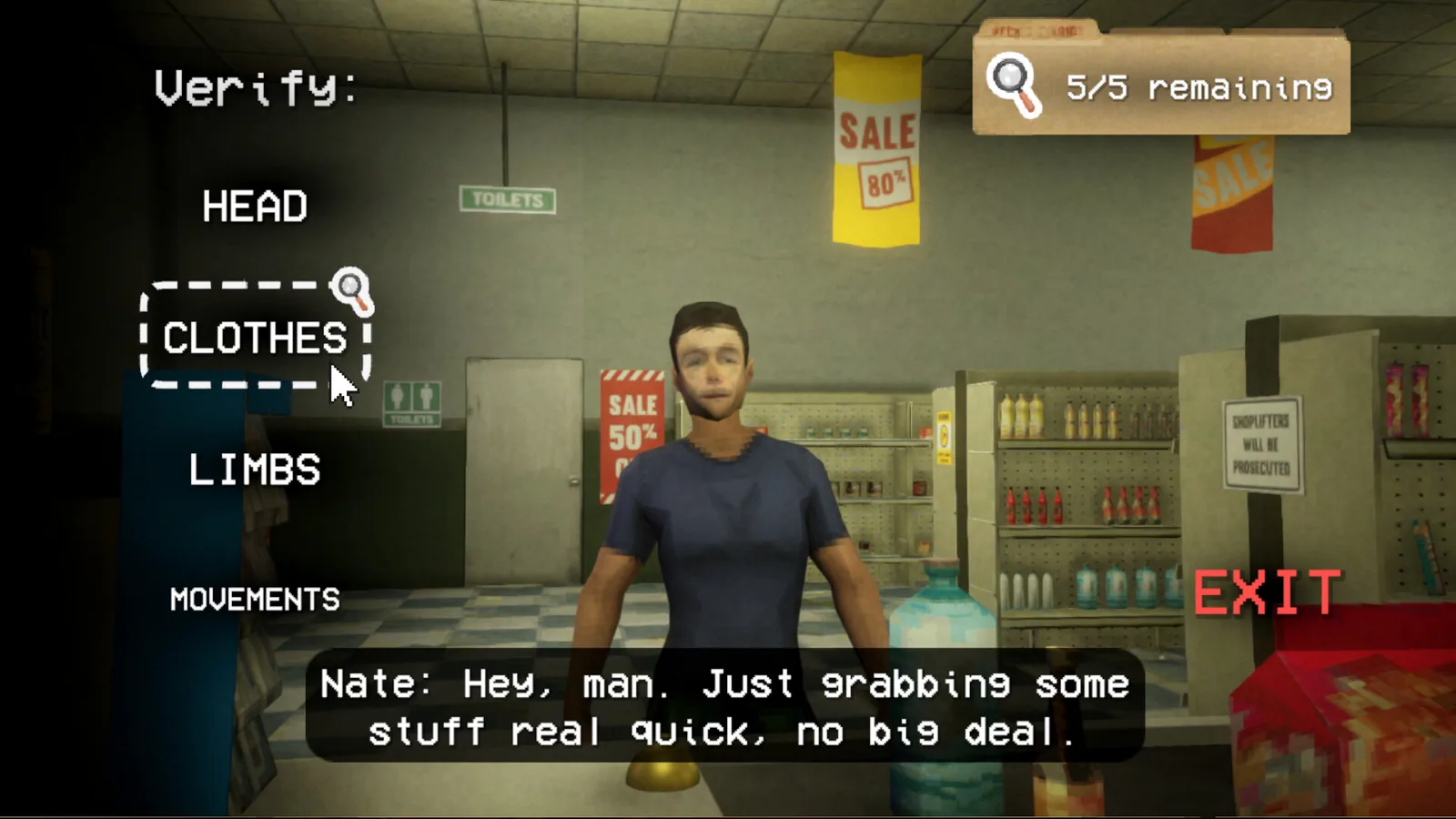
How Doppelganger Checks Work
Shift At Midnight puts customer service and investigation in the same loop. Some people entering the gas station are doppelgangers pretending to be human, so serving a customer is also a decision about whether that person should be allowed to leave.
Treat each visit as a case rather than a reaction test. Finish the checks the game gives you, compare what you can verify, and make the decision only after the information has been considered together. This is safer than declaring a customer human—or not human—because of one isolated impression.
The investigation has three central checks: examining the customer’s ID, cross-checking details in the computer, and observing behavior. Questioning customers and checking their paperwork complete the loop.
Clues to Check Before You Decide
Use the categories the game explicitly supports instead of memorizing an unverified list of visual “tells”:
- Paperwork: read the presented ID carefully before moving on.
- Computer information: compare the record on screen with the information the customer presents.
- Behavior: watch the customer while you complete the other checks.
- Answers: use the available interrogation options when you need more information.
No single category should be treated as an automatic verdict. The useful habit is consistency: use the same order for every customer so an ordinary-looking visitor does not receive a lighter check.
Named customers still need the same complete process. The Tommy Delgado encounter guide shows why a remembered name or community-reported pattern cannot replace the evidence in the current visit.
How to Check Customer IDs
Start with the document in front of you. Read it once for the overall identity, then a second time while the matching computer record is open. The important action is the comparison itself. There is no universal list of fields that will always reveal a doppelganger.
Use a repeatable sequence:
- Examine the presented ID.
- Open or review the corresponding computer information.
- Compare the details shown in both places.
- Keep the customer’s behavior in view while checking.
- Move to questions before making a final decision when the case remains uncertain.
This order keeps paperwork, records, and observation connected. It also makes it easier to notice which part of the case still needs attention.
Questions to Ask Customers
Questioning is part of the customer check, but the exact useful prompt depends on the options the current encounter gives you. Use questions to test the case you already assembled from the ID and computer rather than choosing a verdict first and looking only for confirmation.
If an answer changes how you read the paperwork or behavior, return to that part of the check. The aim is not to exhaust dialogue for its own sake; it is to resolve a specific uncertainty before the customer leaves.
Avoid community-made “always ask this” rules unless the game itself confirms them. Updates can change encounters, while the core process—question, check, compare, decide—remains understandable.
What Happens After a Wrong Decision
Missing a doppelganger is not a harmless scoring error. An undetected creature can return later in the same shift and try to kill the player or their friends.
At that point the situation changes from investigation to survival. The game may require players to barricade doors, place traps, or hide. This is why the customer check should be completed before letting someone leave: a rushed decision can create a more dangerous problem later in the shift.
The game also allows an on-site response when you decide someone is not human. Because the consequences are significant in either direction, make that choice from the full set of available checks rather than a guessed clue.
Solo vs Multiplayer Checks
The same investigation categories apply in single-player and online co-op. Shift At Midnight supports solo play as well as online co-op for up to three players.
When playing alone, a fixed check order reduces the chance of skipping a step while other gas-station tasks compete for attention. In a group, communicate the actual information you see—document detail, computer comparison, observed behavior, or answer—instead of announcing only a verdict. That keeps the final decision reviewable by the team.
The game’s proximity chat is part of the multiplayer experience, but there are no required team roles. Choose a division that keeps all required checks visible and makes sense for your group.
Doppelganger Checklist
Use this short pass before allowing a customer to leave:
- Examine the customer’s ID.
- Cross-check the available details in the computer.
- Observe the customer’s behavior during the check.
- Use the available questions when information remains unclear.
- Review the complete case before deciding.
- If a creature gets away, prepare for the survival phase with barricades, traps, and a place to hide.
Use the monster and Hunt guide to prepare for that second phase without assuming that every missed customer produces the same creature or attack pattern.
As the game changes, encounter-specific clues should be rechecked rather than treated as permanent rules.